
Nobody had to invade us. That is the part of the cyberpunk future we keep getting wrong. There was no war, no takeover, no single day when the world changed. We bought it. We subscribed to it, updated it and left it a review.
I was having a drink with an economist friend in a bar with bad lighting when he said the sentence that became this article. The future we were promised in the novels is not waiting around the corner. It is the room we are sitting in: the surveillance, the precarious work, the screens, the private police, the weather.
I love the genre’s trips to Mars and its predictions. I also think we should stop waiting for the spaceships and look at what already arrived. This is what cyberpunk got right, and what it did not.
present future cyberpunk that does not wait on the other side of the corner. Some call it the immediate future, and I say that we are already living it, although many people are not yet fully aware of it. Others, however, claim that they have already been born in that reality, and that our daily life and our happy past is a utopia of cinema and literature. As I like to do, I will first talk about those things that some people talk about enthusiastically, as part of that future process that they say is already here. I believe, however, that they are trying to sell us a motorcycle. The important thing is not the bike itself, but the fact that they are trying to trick us.The neurolink
This is perhaps the most important technology in the cyberpunk genre. The ultimate interface between man and machine. It has been a classic since the publication of Neuromancer, and even appears in some of Gibson’s earlier stories. Now, Elon Musk, who seems like the reincarnation of Tony Stark in the real world, delights us with another headline: “Neuralink, the company that will connect your brain to your computer” (although a visit to neurolink.com directs me to neuralink.com with a website that looks like something out of a mystery movie….. WOW)
Immersive virtual reality
Wow, another cyberpunk classic. I promise you that I don’t always talk about the same topics in my day-to-day life, only on my blog. When I talk about this concept, I am talking about people spending more real time inside a virtual world than outside, in our reality. People who can make a living in a virtual world, as I mentioned in“11.4 light dreams“. It has to be something worthwhile for some people to prefer to live in it rather than in the physical world where we were born.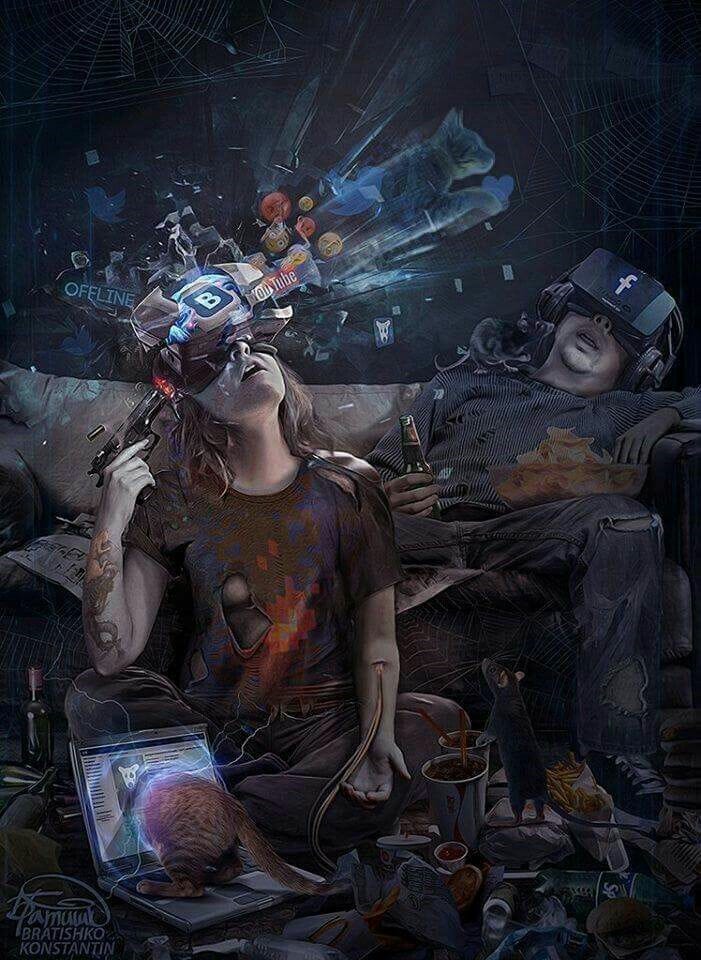 I’ve seen first hand the advances in hardware and software in VR (I have a Sony VR!), and I know people who work in multinationals precisely on these issues and the bad news is this: we won’t see that in the next 5 to 10 years, not by a long shot. There is still a huge amount of hardware needed to make the experience, without a Neurolink, immersive.
Space colonies
Elon Musk (again!) has a great plan to land on Mars around 2024, with the design of a ship that will be able to transport up to 100 people directly from our planet, and beware, the ship will also be able to land on any solid body in the solar system. Just the name of the rocket says a lot: BFR (Big Fucking Rocket).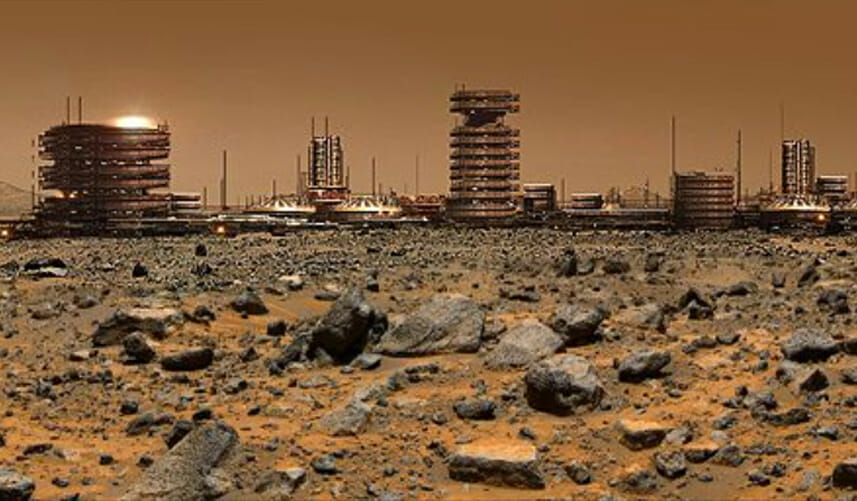 Those who are older and who saw man set foot on the moon probably dreamed something similar to what we all dreamed after listening to Musk: seeing colonies being established on the moon, and soon after, realizing that the reality of every science fiction fan’s greatest fantasy was slowly turning into something everyday and wonderful: space travel.
But the reality is that we are still using the same chemical rocket technology (somewhat enhanced by software) that Von Braun and his Soviet comrades invented. Big Fucking Rocket (100m) is still a rocket shorter than the Saturn V that took three astronauts to the moon in 1969, a whopping 46 years ago, almost half a century. I don’t want to be a doomsayer, because perhaps this is the most realistic of the three (neurolink, virtual reality and space colonies), but perhaps 2024 is an unrealistic date. How about 2030?
The (cyberpunk) future that is already here
Now we are here. But I’m afraid it’s not a revolutionary technological innovation. No, it won’t be artificial intelligence – I have another article to write about that – nor will it be drugs. Have you guessed which one?
Mega-corporations
Evilcorp, Cyberdyne, Tyrell, Weyland-Yutani, Haselfroch, Umbrella. Call it X, but we all know what we’re talking about: companies far more powerful than any state on the planet. We are not there yet, because companies like Amazon are still fiscally and politically tied to one country: the US. Amazon is the first company that is beginning to show its teeth, creating sub-companies that increasingly represent the functions of a state, such as logistics, security, transportation, distribution and in the coming years we will undoubtedly see social security, insurance and pension plans and a long etcetera, taking care of 100% of the needs of its workers.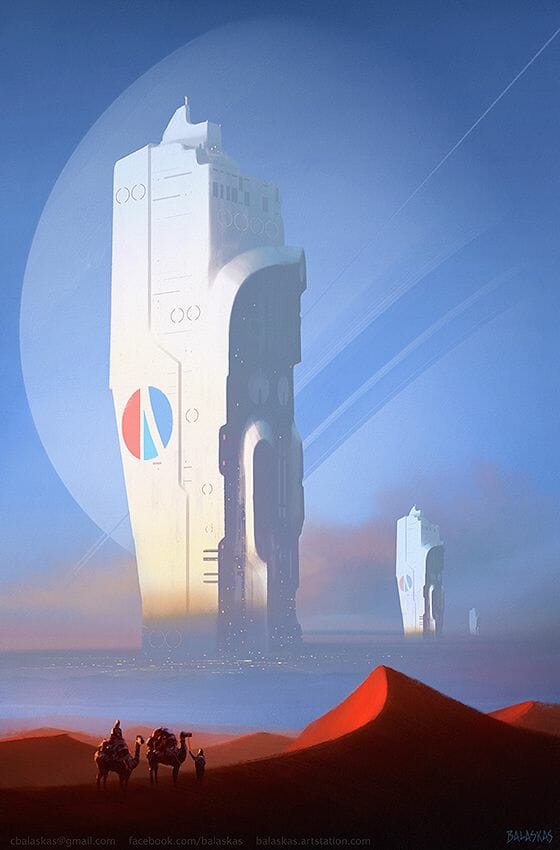 We have already seen this change, from the liberties of a citizen to the rights of a worker, in several petro-monarchies. What happens is that it is not yet striking because it occurs in segments of workers with few resources, but the same change is bound to occur with the elites of the world of work in the first world. And I think we will see this change long before immersive virtual reality, long before neurolink and probably at the same time as the first space colonies, which will undoubtedly be private and outside the orbit of national protection. After all, if Elon Musk founds a colony on Mars, who’s going to stop him from creating his own country? His citizens will not have been born there, and they will have rights and obligations to the new
Keep reading: what cyberpunk means and the best science fiction movies.


No Comments